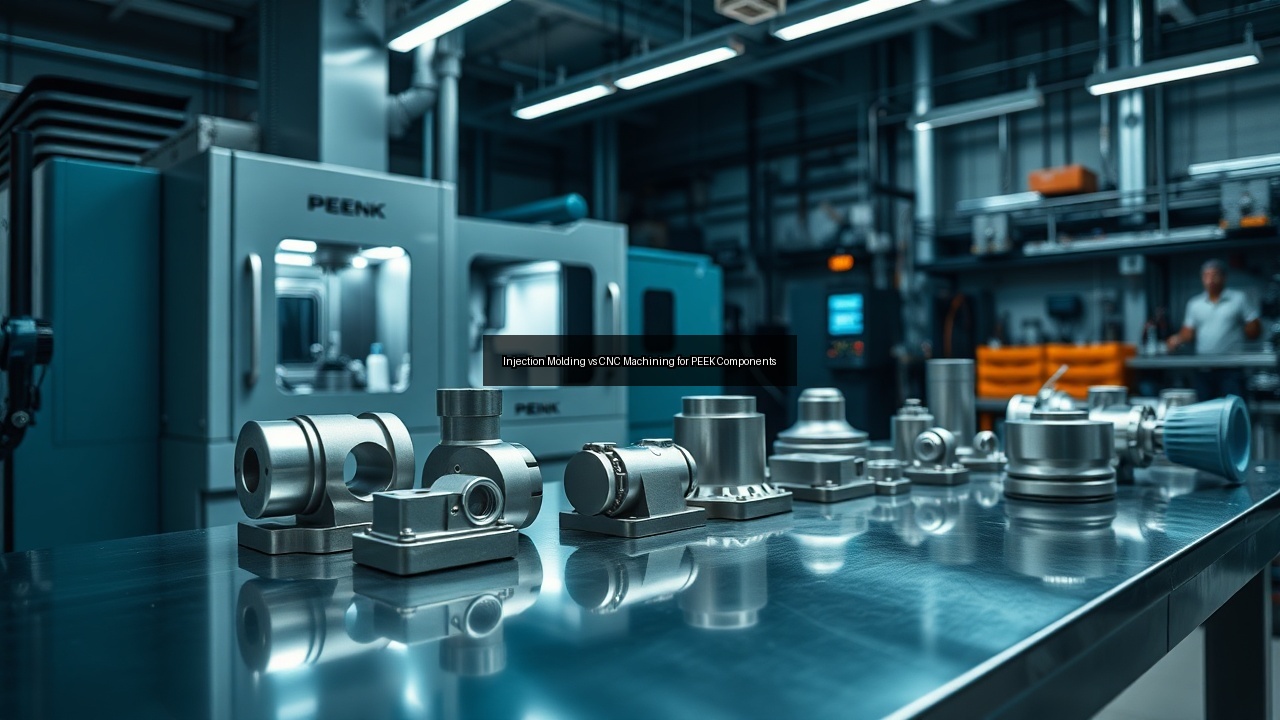
Injection Molding vs CNC Machining for PEEK Components
Understanding PEEK and Its Applications
What is Polyether Ether Ketone (PEEK)?
Polyether ether ketone, commonly known as PEEK, stands out as a high-performance engineering plastic. Its unique molecular structure contributes to exceptional mechanical and thermal properties, making it suitable for demanding applications. PEEK exhibits remarkable resistance to chemicals, heat, and wear, outperforming many traditional materials in various environments. This polymer can withstand continuous operating temperatures up to 260°C (500°F), ensuring longevity and reliability in the most challenging conditions. Manufacturers often choose PEEK for its ability to maintain dimensional stability under stress, making it a preferred option in industries that demand precision and durability.
Key Properties of PEEK as an Engineering Plastic
PEEK boasts several key properties that make it an ideal choice for engineering applications. Its high tensile strength ensures that PEEK components can withstand considerable loads while maintaining their structural integrity. The material also exhibits excellent fatigue resistance, allowing for repeated stress without failure. PEEK’s low friction coefficient enhances its performance in moving applications, reducing wear on tools and fixtures. Additionally, its inherent chemical resistance protects against aggressive substances, making it suitable for environments involving harsh chemicals or solvents. These characteristics position PEEK as a leading candidate for applications requiring high performance, reliability, and versatility.
Common Applications of PEEK Components
PEEK components find extensive use across various industries due to their superior properties. The automotive sector frequently employs PEEK in manufacturing valve components, gaskets, and seals, where high thermal and chemical resistance is critical. In the aerospace industry, PEEK serves in components exposed to extreme conditions, such as aircraft interiors and engine parts. Medical applications also benefit from PEEK's biocompatibility, using it in surgical instruments and implants. Other industries, including oil and gas, utilize PEEK for downhole equipment and seals, where durability and reliability are paramount. The versatility of PEEK continues to expand as industries seek advanced materials for complex applications.
Injection Molding vs CNC Machining: An Overview
Process Overview of Injection Molding for PEEK
Injection molding for PEEK involves melting the polymer and injecting it into a mold to create complex shapes with high precision. This process allows for the mass production of PEEK components, making it a cost-effective option for large runs. The molten PEEK fills the mold cavity, taking on the desired form as it cools and solidifies. This method excels in producing intricate geometries and consistent features across multiple parts. Injection molding minimizes waste, as excess material can be reused in the process. However, the initial investment in mold design and fabrication can be significant, making this option more viable for larger production volumes where economies of scale can be realized.
Understanding CNC Machining for PEEK Parts
CNC machining offers a different approach for creating PEEK components, focusing on precision and versatility. This subtractive manufacturing process involves removing material from a solid block of PEEK using computer-controlled tools, such as mills and lathes. CNC machining allows for the production of highly intricate and precise components, making it suitable for low-to-medium volume runs where customization is essential. The capability to achieve tight tolerances is one of the key advantages of CNC machining, making it ideal for applications requiring exact specifications. Additionally, CNC machining provides flexibility in design changes, allowing quick adjustments without the need for new molds, which can be a significant advantage in rapidly evolving projects.
Comparative Analysis of Injection Molded and CNC Machined PEEK
Both injection molding and CNC machining present unique advantages and disadvantages when producing PEEK components. Injection molding excels in high-volume production, delivering uniform parts at a lower per-unit cost due to its efficiency. However, it may lack the flexibility needed for complex designs or customizations. On the other hand, CNC machining shines in producing intricate designs with high precision, allowing for rapid prototyping and adjustments. The trade-off comes with higher costs per part for low-volume runs and potentially longer lead times. Ultimately, the choice between these methods hinges on production volume, design complexity, and budget considerations, making it essential to evaluate specific project requirements before deciding.
Cost and Tolerance Considerations
Cost Factors in Producing PEEK Components
Cost plays a crucial role in the decision-making process for manufacturing PEEK components. Injection molding generally offers lower costs for high-volume production due to the efficiency of mass-producing machining in PEEK parts. The initial expenses of creating molds can be substantial, but these costs amortize over large production runs. machining PEEK parts Conversely, CNC machining entails lower initial costs since it does not require molds, but the per-part price can increase significantly for larger volumes. Material costs for PEEK also contribute to overall expenses, as this engineering plastic is typically more expensive than conventional plastics. Evaluating the total cost of ownership, including tooling, labor, and material expenses, assists in making an informed decision between production methods.
Tolerance and Precision in CNC Machining
CNC machining offers remarkable precision and tight tolerances, essential for applications requiring exact specifications. The ability to achieve tolerances of ±0.01 mm (±0.0004 inches) ensures that CNC machined PEEK parts meet rigorous quality standards. This precision is especially critical in industries such as aerospace and medical, where even minor deviations can have significant consequences. The precision of CNC machining allows for intricate designs that might be unattainable through injection molding. However, tool wear and machine calibration can influence precision, necessitating regular maintenance and monitoring to maintain high standards. Investing in skilled operators and advanced machinery further enhances the accuracy of CNC machined PEEK components.
Impact of Surface Finish on Component Performance
The surface finish of PEEK components significantly affects their performance and longevity. CNC machining can achieve various surface finishes, from rough to polished, depending on the application requirements. A smoother surface finish peek machining reduces friction, which is critical in applications involving moving parts or seals. Conversely, a rougher finish may enhance adhesion or provide a better grip in certain applications. Injection molding typically yields a consistent surface finish, but achieving specific finishes may require additional post-processing steps. The choice of surface finish impacts not only aesthetic considerations but also functional performance, making it vital to align the finish with the intended application of the PEEK components.
Choosing the Right Method for PEEK Components
When to Use Injection Molding for PEEK Parts
Injection molding becomes the preferred choice when large-scale production of PEEK parts is necessary. This method excels in creating uniform components rapidly, making it ideal for applications with high demand. Industries such as automotive and consumer goods benefit from the efficiency and cost-effectiveness of injection molding. Additionally, when the design involves complex geometries that can be effectively captured in a mold, injection molding provides an optimal solution. The ability to create intricate designs while minimizing waste and production time makes this method advantageous in scenarios where speed and consistency are critical.
Optimal Scenarios for CNC Machining PEEK
CNC machining is best suited for applications requiring high precision and customization. When producing low-to-medium volume runs, CNC machining allows for quick design changes without the need for new molds. This flexibility is invaluable in industries such as aerospace and medical, where specifications may evolve during the design process. CNC machining also shines in applications requiring intricate details or tight tolerances, making it ideal for bespoke parts. Furthermore, when producing prototypes or one-off components, CNC machining provides the agility necessary to meet specific project requirements without the extensive lead times associated with mold creation.
Future Trends in PEEK Manufacturing Technologies
The future of PEEK manufacturing technologies promises exciting advancements. Innovations in additive manufacturing and 3D printing may expand the possibilities for producing PEEK components, offering new ways to achieve complex geometries and lightweight structures. These technologies could complement traditional methods like injection molding and CNC machining, providing hybrid solutions that capitalize on the strengths of each. Additionally, advancements in tooling materials and techniques may enhance the efficiency and longevity of molds used in injection molding, reducing costs and improving the quality of injection molded PEEK parts. As industries continue to seek high-performance materials for demanding applications, PEEK will likely remain at the forefront of engineering plastics, driving innovation and development in manufacturing processes.